
In Amsterdam
A scene from a not so recent trip to Amsterdam
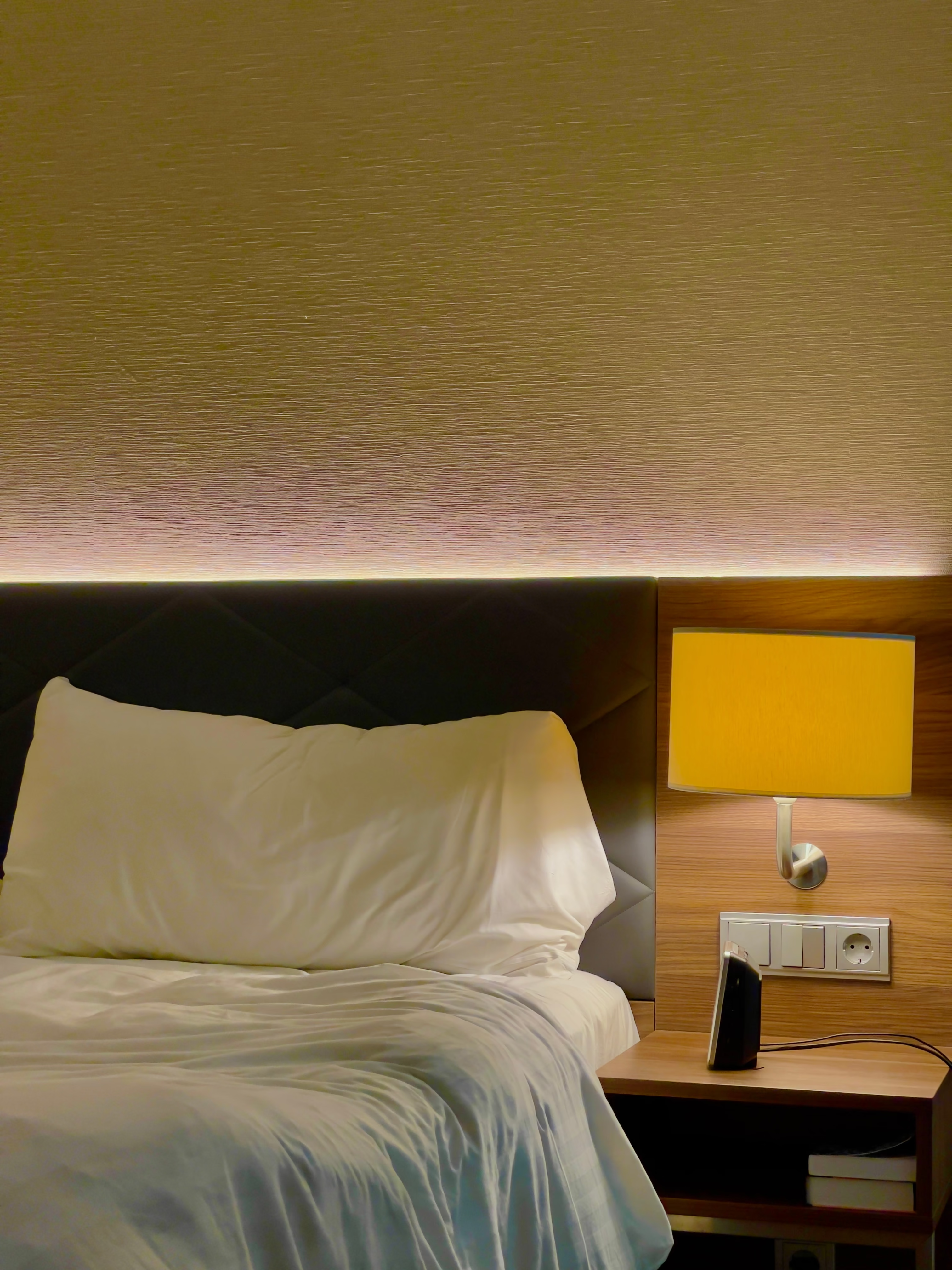
At first I did not realize it was raining. It was only a texture, and when I stopped to listen it resolved into individual taps on the hotel window. The lamp on the table beside the bed was lit. It threw yellow across the sheets.
I had carried the bag, the coat and the umbrella all day, expecting rain. I dropped them by the door, took off my shoes and sank in. The mattress took my whole weight at once. The sound of the rain filled the room.
All of Amsterdam, all of what I had come for, was out there, one door and one flight of stairs away. Canals I had not walked, bars with Dutch menus I had not tried to translate, streets I had not gotten lost in. But the four walls, the lamp, the bed and the rain were enough. It did not add up, and for a while I let it not add up.
I had brought only clothes, a charger, a book, untouched.[1] Nothing that could pull the evening apart into small debts. I lay there longer than I meant to.[2] Would it feel the same if this were not Amsterdam? Same lamp, same rain, same four walls.
In Budapest, Mon Cherie closed at eleven. The ramen at Komachi was best before seven. By six the students had taken every good seat in California Coffee Company.[3]
In Amsterdam, I was free of this quiet arithmetic.[4]
Outside, the rain kept at it. The lamp still threw yellow across the sheets. The room was my whole world, and it was enough.
What was left instead was just this: the lamp, the rain, and an unusual amount of me, present in a way I don’t often get to be. Not anxious about it, the way sitting with nothing to do sometimes turns anxious. Just here. Occupying an evening instead of managing one. ↩︎
I kept circling back to how strange the enjoyment was, lying there doing essentially nothing, feeling as good as I did. It was the kind of good feeling that made you suspicious of itself. ↩︎
In Budapest, I would have known exactly what I would be giving up. All of it named, priced, remembered. Staying in would not have been neutral anymore — it would have been a decision made against a list, and every item on that list would have had a name attached, a taste, a memory of how good it usually was. Underneath the same tiredness that wanted to stay in, I would have felt something quieter and more persistent: not guilt exactly, but an audit running somewhere in the back of my mind, and I would have been failing it. ↩︎
That was the difference, I think. Knowing a place turns it into an inventory. Once you know what’s out there, every hour spent indoors gets weighed against what it costs you not to take. The city becomes a kind of ledger, and rest starts to look like an entry in red. Amsterdam was not withholding anything from me that night, because I did not know what it had. There was no café I was skipping, no walk I was supposed to be taking, because none of those existed for me yet. Nothing out there was legible enough to be missed. Which might have been the actual shape of the paradox I started with — that I came looking for the flood and found, instead, that the stillness only worked because the flood was unknowable. There was no better version of that night waiting a few streets over, because I had no way to picture what it would even look like. So I stayed, and for once staying cost nothing. ↩︎